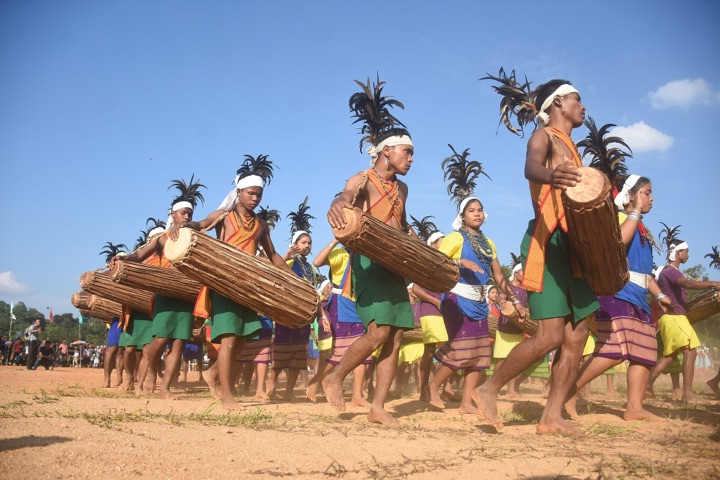
Hornbill is a festival of dance, music and crafts. Ask anyone who has been, though, and they will tell you about the food. Every tribe has its own morung, a traditional house, at the Kisama heritage village. Many of them cook and serve their own dishes, so in one afternoon you can eat your way across Nagaland.
Five things to look for
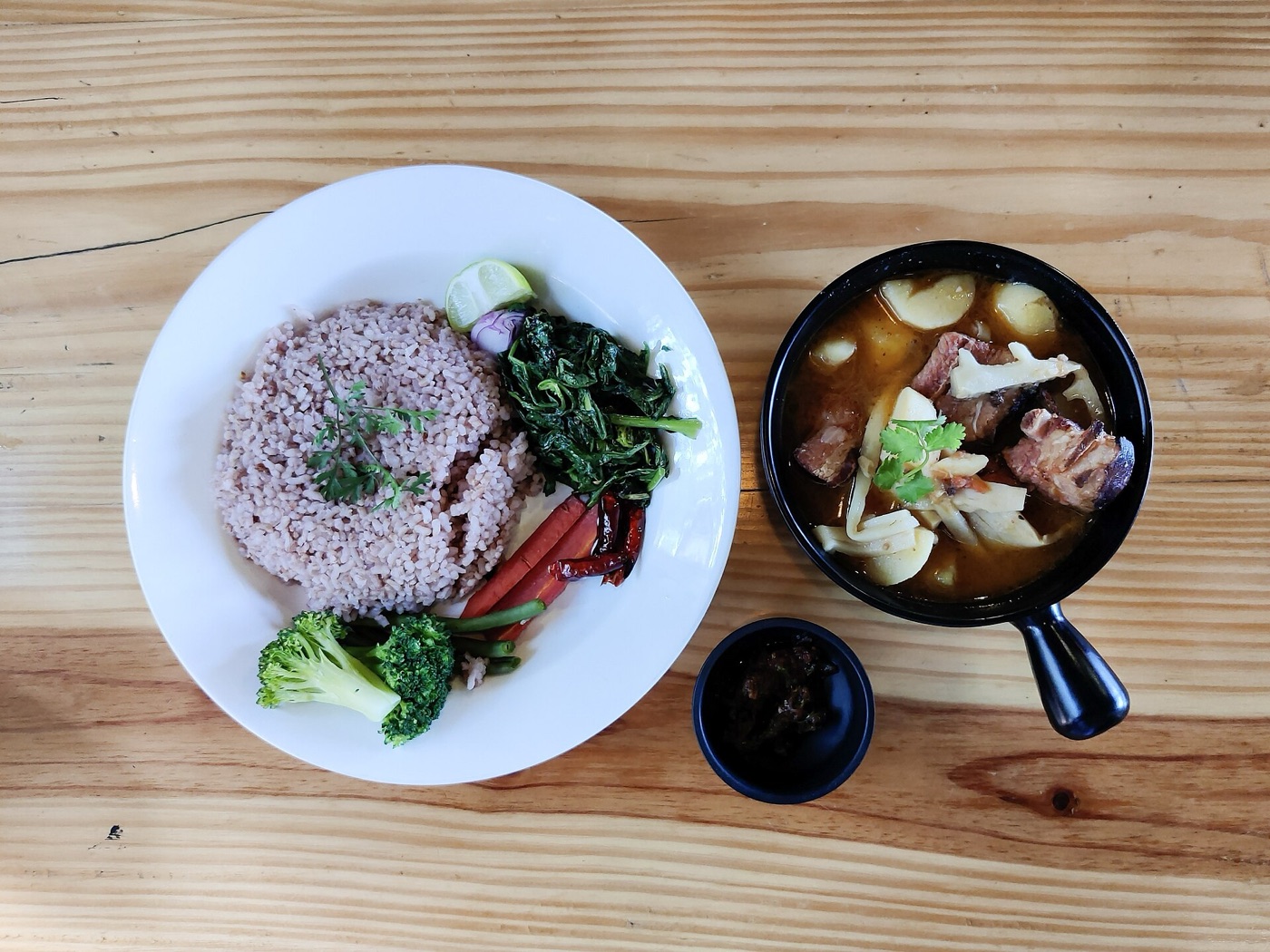
- Smoked pork. The dish Nagaland is known for, cooked with bamboo shoot or with axone, the fermented soybean. Smoky, rich and often very hot.
- Anishi. An Ao dish made from colocasia leaves that are dried, fermented and shaped into cakes, then cooked, often with pork. It is sour and earthy.
- Galho. A thick, comforting rice porridge cooked with greens and vegetables, sometimes with meat. A good meal on a cold Kohima evening.
- Raja mircha chutney. The king chilli, the subject of our ghost pepper story, pounded with tomato or ginger. Try a little first.
- Rice beer. Brewed at home across Nagaland and served in bamboo mugs. The Angami version, zutho, is mild and milky.
Every morung is its own kitchen. One afternoon covers a whole state.
For the adventurous
Some stalls serve dishes made with insects and larvae, which are a seasonal delicacy in parts of Nagaland. If you are curious, ask what is in the dish. The cooks are usually happy to explain.
How to eat well at Kisama
- Go at lunchtime, when the morungs are cooking and the dishes are freshest.
- Carry cash. Network and card machines can be patchy on busy days.
- Share plates. Go as a group, order different dishes from different morungs, and pass them around.
- Ask before you photograph people cooking.
- Pork is everywhere. If you do not eat it, ask. Most morungs also cook chicken, fish or vegetable dishes.
Planning the rest of your trip? Read our first-timer’s survival guide.