Assam has three Bihus, and two of them are loud. Rongali Bihu in April brings the dhol, the pepa and the new year. Magh Bihu in January brings bonfires and a feast. Kati Bihu, which falls on 18 October this year, is different. There is no feast to speak of. Families light lamps and say prayers, and the evening stays quiet.
Why it is called the poor Bihu
Its other name is Kongali Bihu, from a word meaning poor. By the month of Kati, most of last year’s rice has been eaten and the granaries are close to empty. The new crop is still green in the fields. So nobody throws a party. Families pray that the paddy grows well and is not ruined by pests or bad weather before the harvest.
The granary is nearly empty and the field is still green. Kati Bihu is a prayer for what comes next.
A lamp at the tulsi, a lamp in the field
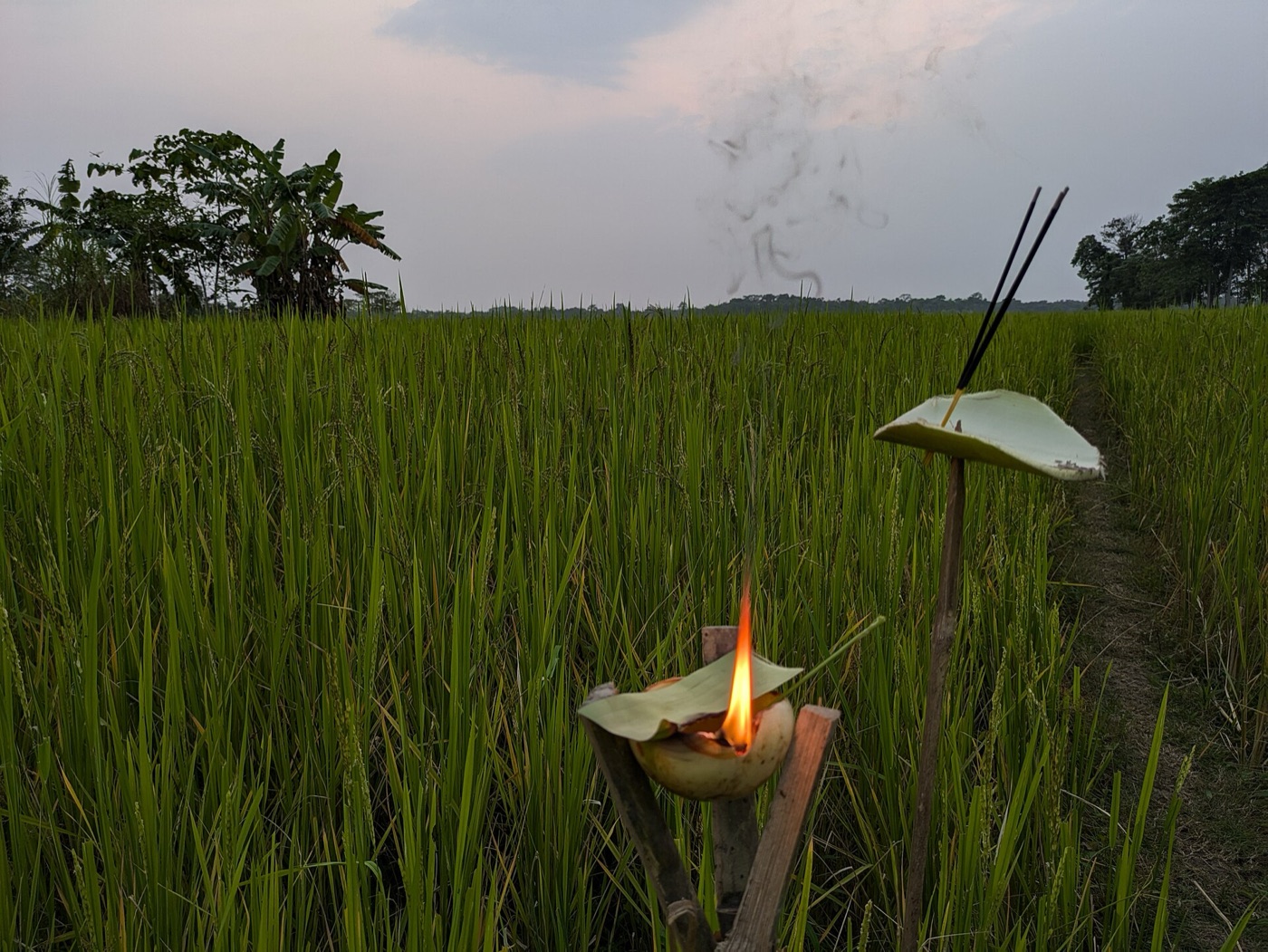
At dusk, families place a small earthen lamp, a saki, at the foot of the tulsi plant in the courtyard. Many also light lamps at the granary and around the house. In farming villages, people raise lamps on tall bamboo poles in the paddy fields. These sky lamps, akash banti, are said to light the way for ancestors. They also draw insects away from the crop.
The lamps do not stop after one night. Many households keep the tulsi lamp burning every evening through the month of Kati.
Kati Bihu in the city
In Guwahati and other towns, there are fewer fields, but the habit has moved indoors. People put a lamp on the balcony or by a potted tulsi, and the evening prayer stays the same. Kati Bihu also comes just before the Diwali season, so on many streets the two sets of lamps run into each other.
If you are visiting
- Go to a village on the edge of a town at dusk. Lamps in the paddy are the sight to see.
- Keep it low-key. This is a prayer, not a party. Ask before you photograph anyone’s courtyard.
- Come back in January for Magh Bihu, when the crop is in and the feasting begins.