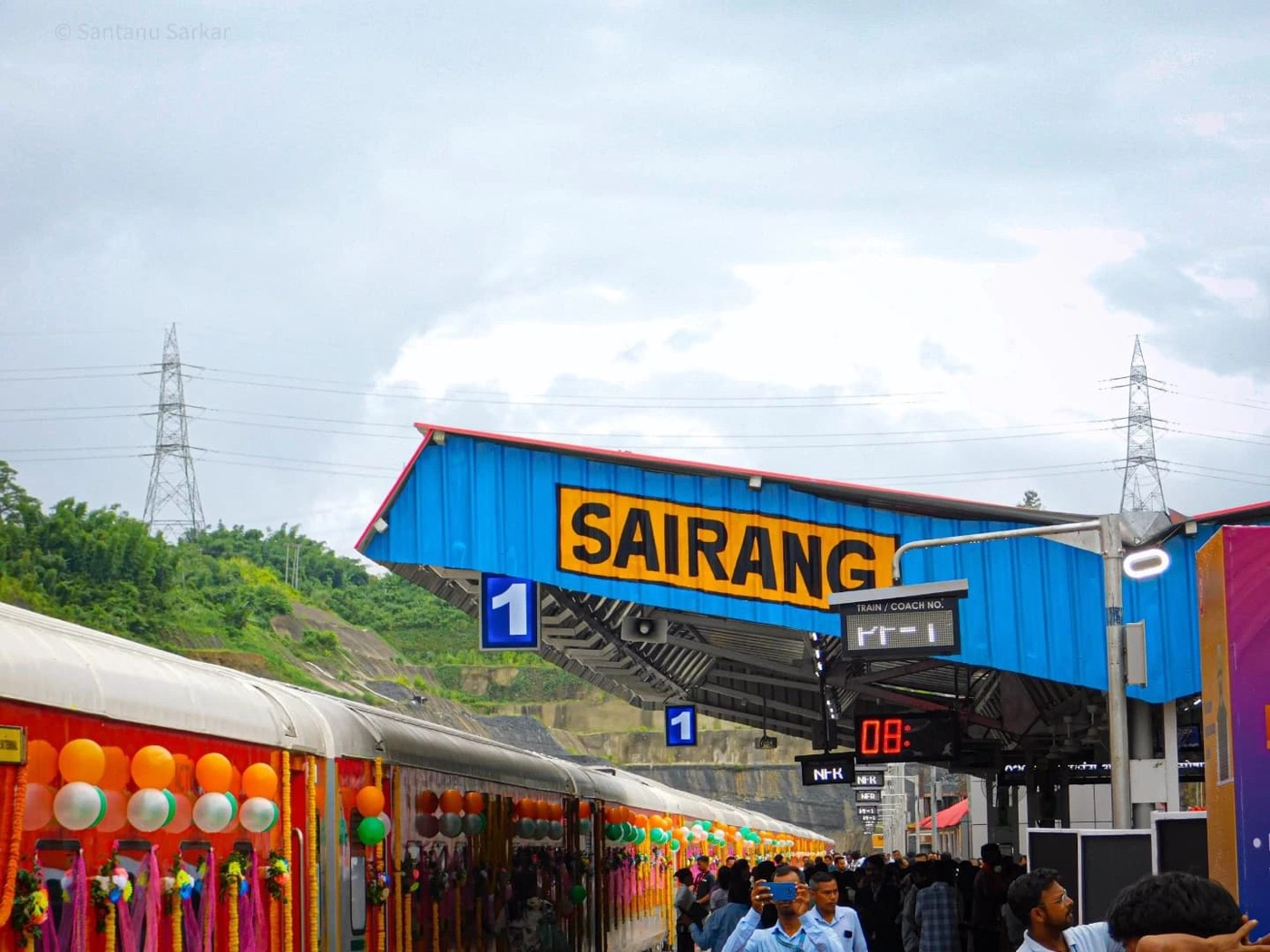
For most of its history, getting to Aizawl meant a long road journey through the hills or a flight. In September 2025, that changed. The Bairabi–Sairang line put Mizoram’s capital on India’s railway map, and a year later the trains are some of the fullest in the country.
A railway through the hills
The line runs for about 51 km, and building it meant cutting through the hills and bridging the gorges. It has 45 tunnels, together nearly 16 km long, and 153 bridges. The tallest bridge rises 114 metres, 42 metres higher than Delhi’s Qutub Minar.
Three trains, all running well over capacity, in the first year.
Full trains
Sairang station recorded more than 5.54 lakh passenger movements in the line’s first year, an average of over 3,300 a day, according to figures reported by EastMojo. Three trains run from the station:
- Rajdhani Express to Anand Vihar, Delhi: average occupancy above 145%.
- Sairang–Kolkata, three times a week: above 140%.
- Sairang–Guwahati, daily: consistently above 110%.
Together, the three trains brought in about ₹54 crore in ticket sales.
Cement, cars and flowers
The line has changed what reaches Mizoram, and how fast. More than 2,500 freight wagons arrived in the first year. About 70% carried building materials such as cement, stone and sand. The first goods train brought more than 26,000 bags of cement the day after the line opened. In December 2025, 119 cars arrived by rail for the first time. Freight goes the other way too. The first parcel out of Sairang was a load of anthurium flowers, sent to Delhi on the Rajdhani on 19 September 2025.
Taking the train
- Book early. With trains running this full, seats go fast.
- Sairang is outside the city. Plan a cab or a shared taxi into Aizawl.
- You still need a permit. Mizoram requires an Inner Line Permit for visitors from other Indian states, so sort it out before you travel.